


- Description
| Application | Conditions | Recommended Concentration |
| Flow Cytometry, Extracellular | Live, Unpermeabilized | 1 µg/ml |
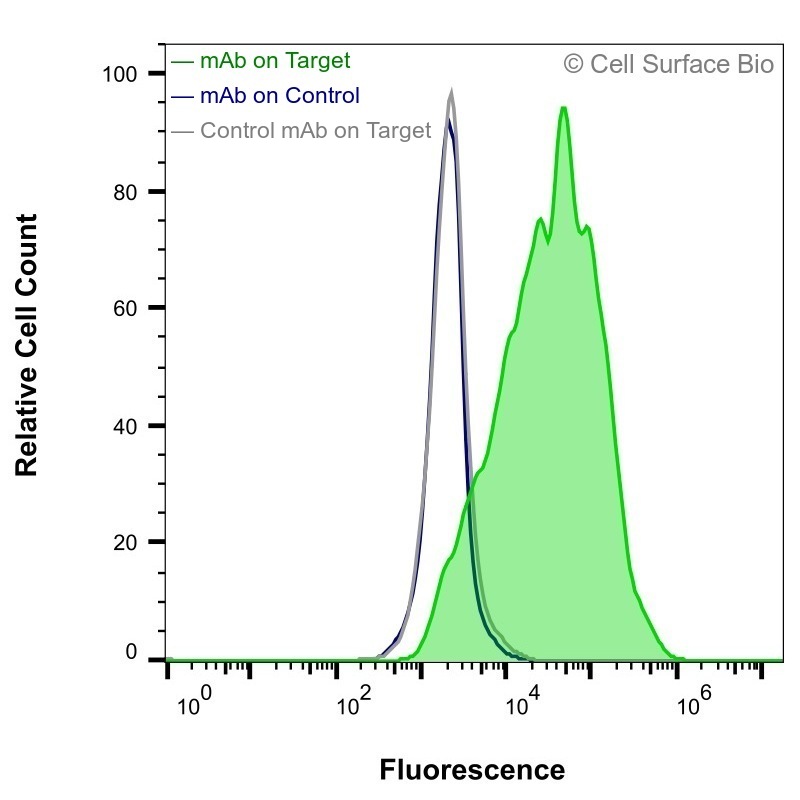 |
JS-1 cells transiently transfected with human PLP1 were stained with PLP1 Monoclonal Antibody (CSB0241) (green) or isotype control antibody (gray), followed by AlexaFluor 647- conjugated anti- IgG secondary antibody. JS-1 cells transiently transfected with an empty control vector were also stained with PLP1 Monoclonal Antibody (CSB0241) (blue). | |
| Application | Conditions | Recommended Concentration |
| Membrane Proteome Specificity | ||
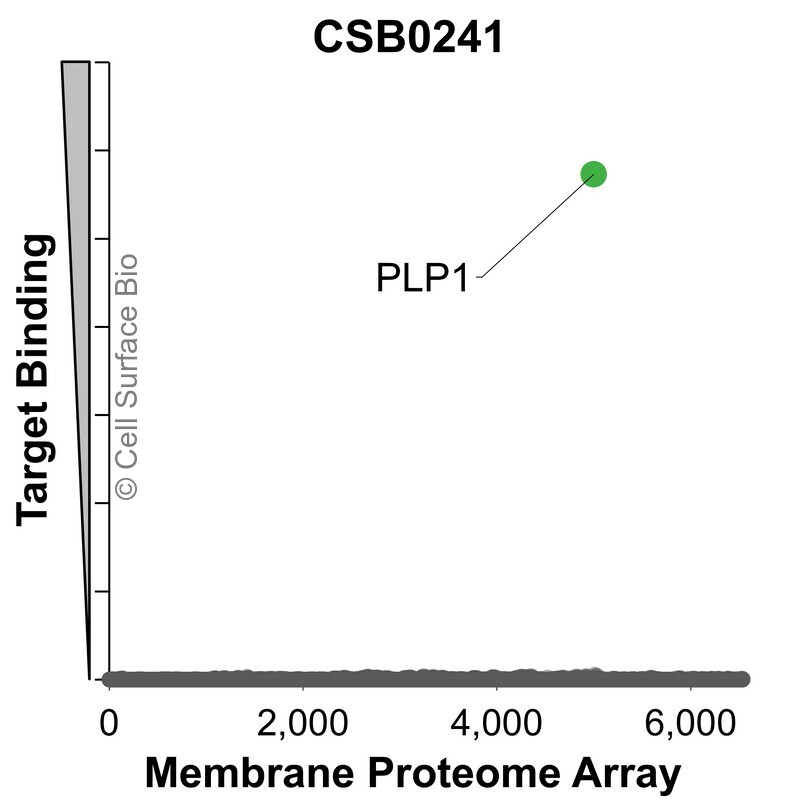 |
The specificity of PLP1 Monoclonal Antibody (CSB0241) was tested on the Membrane Proteome Array™ and shown to be specific for human PLP1. The Membrane Proteome Array™ contains 6,000 different human membrane proteins, each expressed in unfixed Human cells to ensure native conformation and post-translational modifications. The Membrane Proteome Array™ represents the industry standard for determining the binding specificity of antibodies and other protein ligands. | |
CSB VeRSaMAbs:
We produce and validate all our monoclonal antibodies in-house so that you can confidently choose the right antibody for your assay. All antibodies are VALIDATED for common applications, RECOMBINANT for batch-to-batch consistency, and SPECIFIC in binding to only your target.
| Target | PLP1 |
| Target Aliases | GPM6C, HLD1, MMPL, PLP, PLP/DM20, PMD, SPG2 |
| Isotype | Mouse IgG2a |
| Species Reactivity | Human, Mouse, Cow |
| Concentration | 1 mg/ml |
Stable for 12 months from date of receipt when stored at 4°C. Avoid repeated freeze-thaw cycles.
Proteolipid protein 1 (PLP1) is a major component of myelin in the central nervous system, playing a critical role in the formation and maintenance of myelin sheaths. This protein is essential for proper neuronal function and has been implicated in several demyelinating disorders, making it a significant focus in neurological research. PLP1's expression is predominantly found in oligodendrocytes, underscoring its importance in myelin biology.