| Application |
Conditions |
Recommended Concentration |
| Immunofluorescence, Extracellular |
Fixed 4% paraformaldehyde |
1 µg/ml |
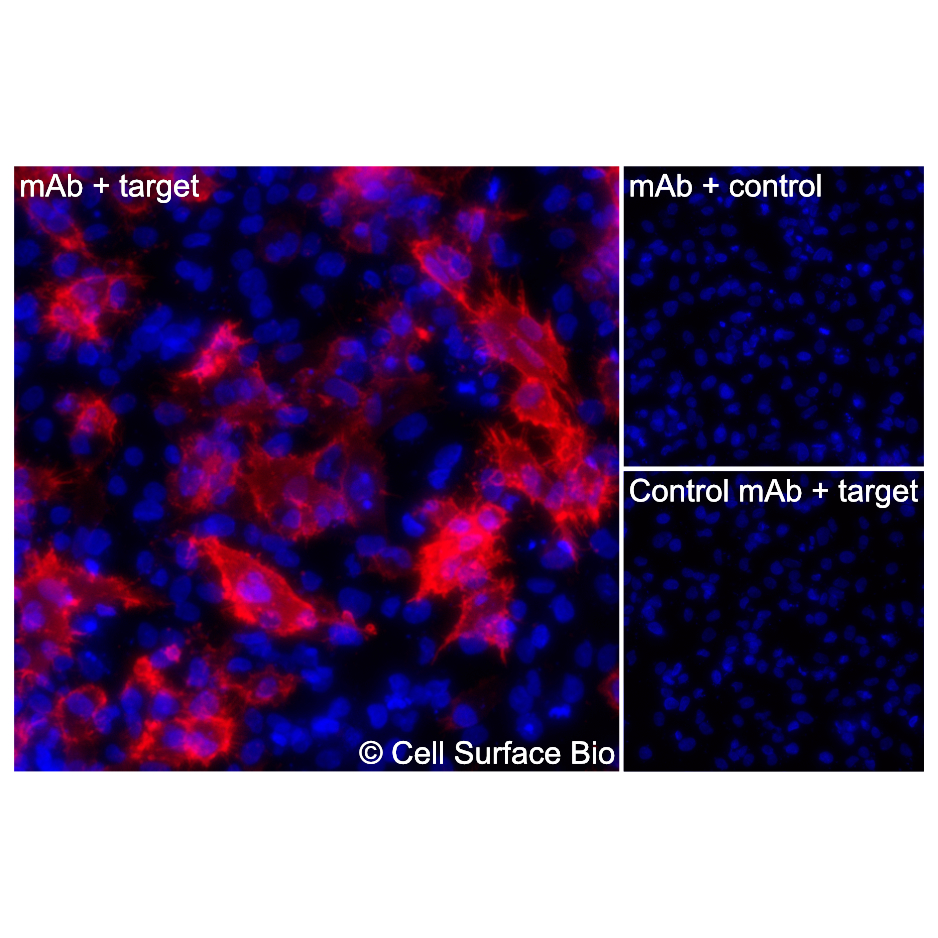 |
(Left) JS-1 cells transiently transfected GPRC5D were stained with GPRC5D Monoclonal Antibody (CSB0219) followed by AlexaFluor 647 anti- IgG secondary antibody (red) and DAPI (blue). (Top right) JS-1 cells transiently transfected with an empty control vector stained with GPRC5D Monoclonal Antibody. (Bottom right) Isotype control: JS-1 cells transfected with GPRC5D and stained with control MAb. |
| Application |
Conditions |
Recommended Concentration |
| Immunofluorescence, Intracellular |
Fixed 4% paraformaldehyde, Permeabilized 0.1% Triton X-100 |
1 µg/ml |
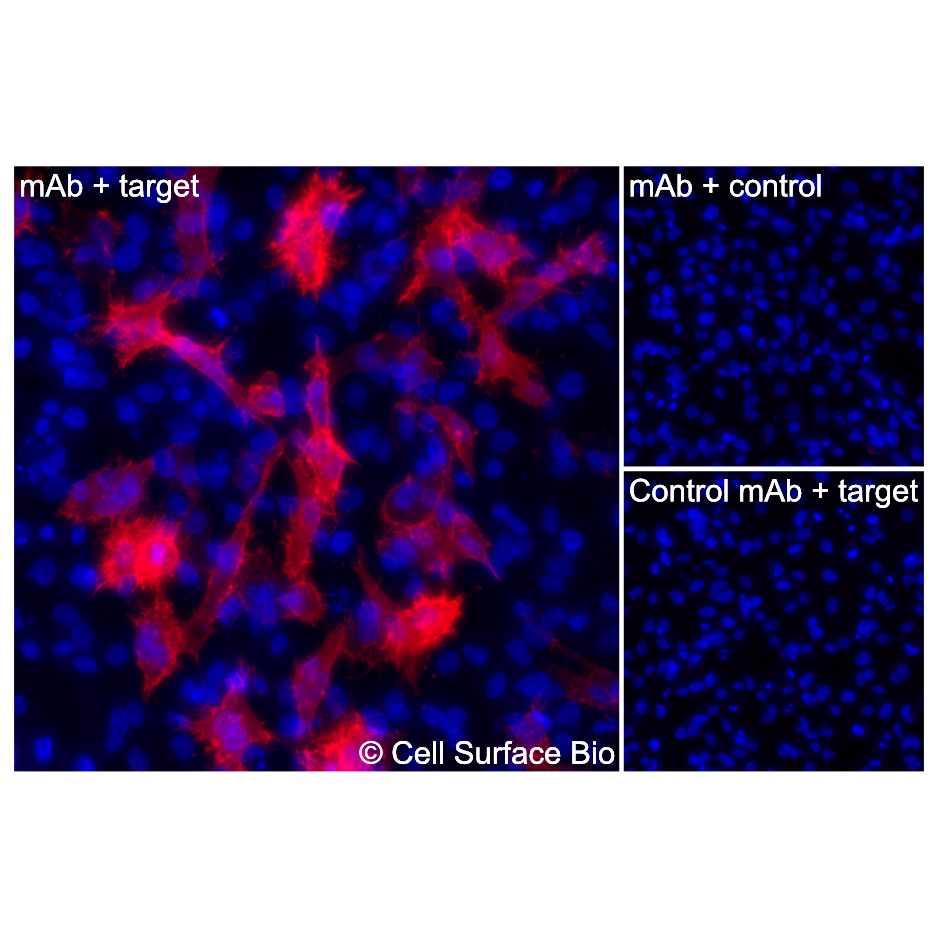 |
(Left) JS-1 cells transiently transfected GPRC5D were permeabilized and stained with GPRC5D Monoclonal Antibody (CSB0219) followed by AlexaFluor 647 anti- IgG secondary antibody (red) and DAPI (blue). (Top right) JS-1 cells transiently transfected with an empty control vector stained with GPRC5D Monoclonal Antibody. (Bottom right) Isotype control: JS-1 cells transfected with {{target} and stained with control MAb. |
| Application |
Conditions |
Recommended Concentration |
| Flow Cytometry, Extracellular |
Live, Unpermeabilized |
1 µg/ml |
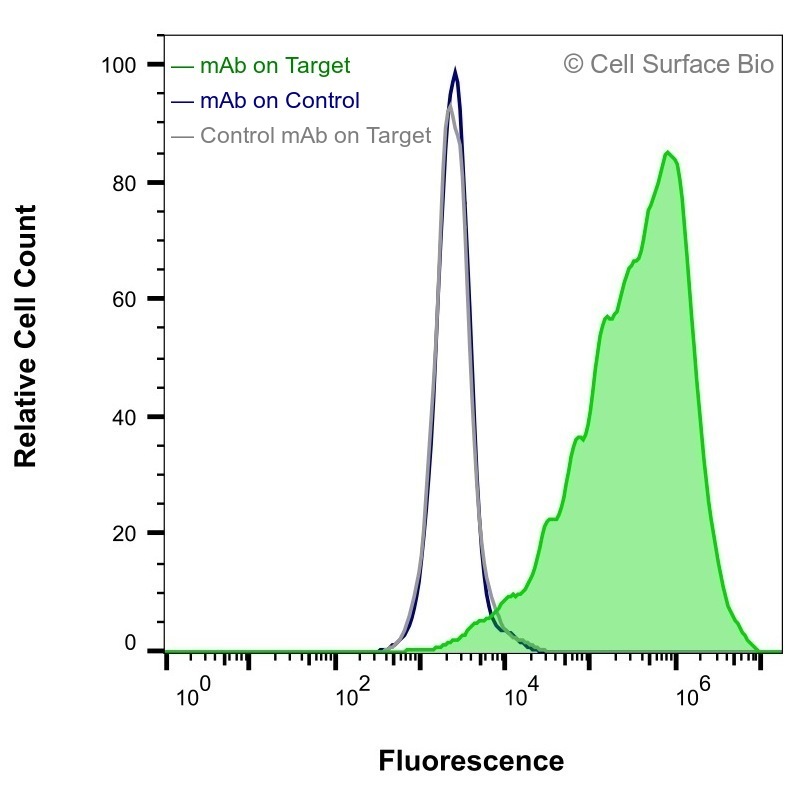 |
HEK-F cells transiently transfected with GPRC5D were stained with GPRC5D Monoclonal Antibody (CSB0219) (green) or isotype control antibody (gray), followed by AlexaFluor 647- conjugated anti- IgG secondary antibody. HEK-F cells transiently transfected with an empty control vector were also stained with GPRC5D Monoclonal Antibody (CSB0219) (blue). |
| Application |
Conditions |
Recommended Concentration |
| Membrane Proteome Specificity |
|
|
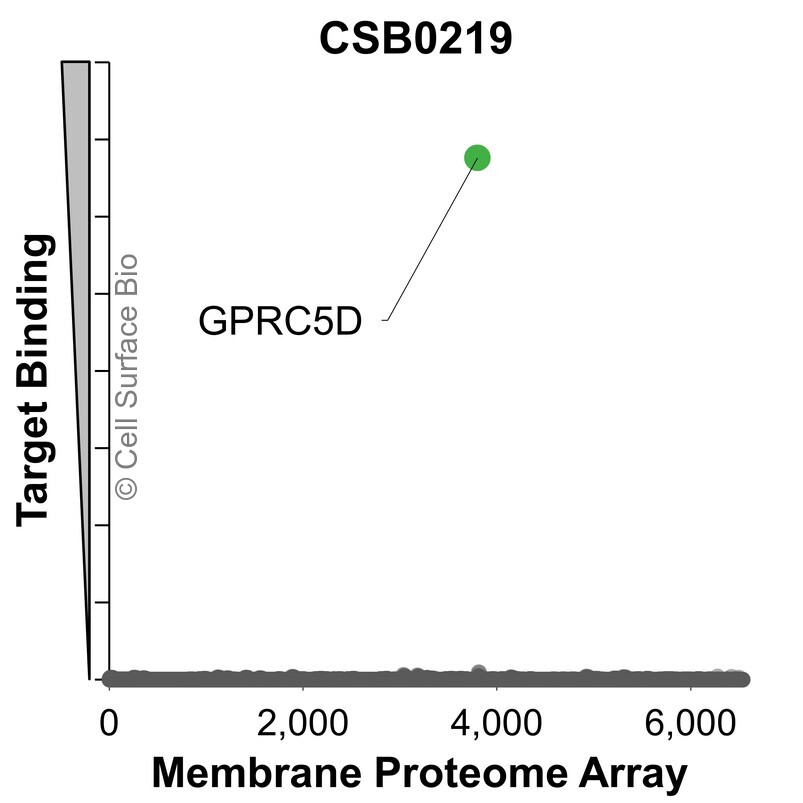 |
The specificity of GPRC5D Monoclonal Antibody (CSB0219) was tested on the Membrane Proteome Array™ and shown to be specific for GPRC5D. The Membrane Proteome Array™ contains 6,000 different human membrane proteins, each expressed in unfixed Human cells to ensure native conformation and post-translational modifications. The Membrane Proteome Array™ represents the industry standard for determining the binding specificity of antibodies and other protein ligands. |
CSB VeRSaMAbs:
We produce and validate all our monoclonal antibodies in-house so that you can confidently choose the right antibody for your assay. All antibodies are VALIDATED for common applications, RECOMBINANT for batch-to-batch consistency, and SPECIFIC in binding to only your target.
| Target |
GPRC5D |
| Target Aliases |
GPCR family C group 5 member D, G Protein-Coupled Receptor, Class C, Group 5, Member D, G-Protein Coupled Receptor Family C Group 5 Member D, Orphan G-Protein Coupled Receptor |
| Isotype |
Mouse IgG2a |
| Species Reactivity |
Human (Others untested) |
| Concentration |
1 mg/ml |
Stable for 12 months from date of receipt when stored at 4°C. Avoid repeated freeze-thaw cycles.
G protein-coupled receptor class C group 5 member D (GPRC5D) is a member of the class C G protein-coupled receptor family, characterized by seven transmembrane helices typical of GPCRs and a relatively short extracellular N-terminus compared to other class C receptors. It is primarily expressed in keratinized tissues, including hair follicles, and plasma cells. GPRC5D is a therapeutic target for multiple myeloma. The endogenous ligand and definitive biological function of GPRC5D have not been clearly established in experimentally supported database annotations. Its structural features are consistent with signaling through heterotrimeric G proteins.