


- Description
| Application | Conditions | Recommended Concentration |
| Immunofluorescence, Intracellular | Fixed 4% paraformaldehyde, Permeabilized 0.1% Triton X-100 | 1 µg/ml |
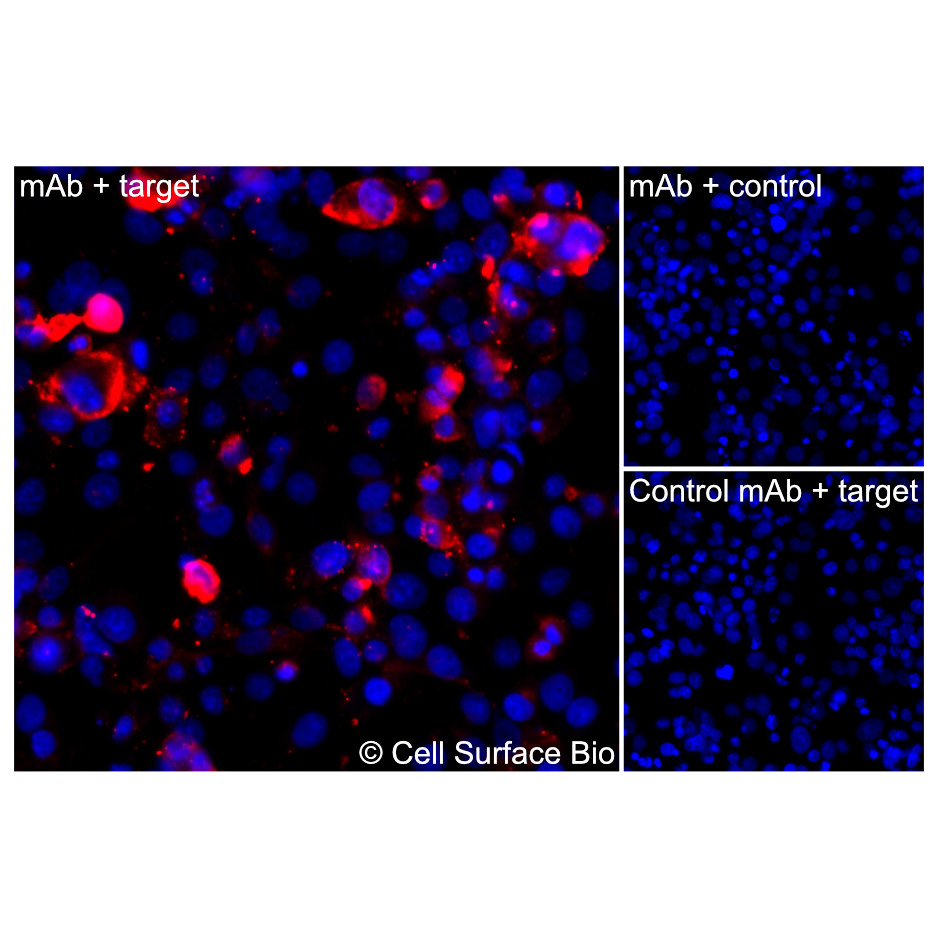 |
(Left) COS-7 cells transiently transfected ADORA2A were permeabilized and stained with ADORA2A Monoclonal Antibody (CSB0002) followed by AlexaFluor 647 anti- IgG secondary antibody (red) and DAPI (blue). (Top right) COS-7 cells transiently transfected with an empty control vector stained with ADORA2A Monoclonal Antibody. (Bottom right) Isotype control: COS-7 cells transfected with {{target} and stained with control MAb. | |
| Application | Conditions | Recommended Concentration |
| Membrane Proteome Specificity | ||
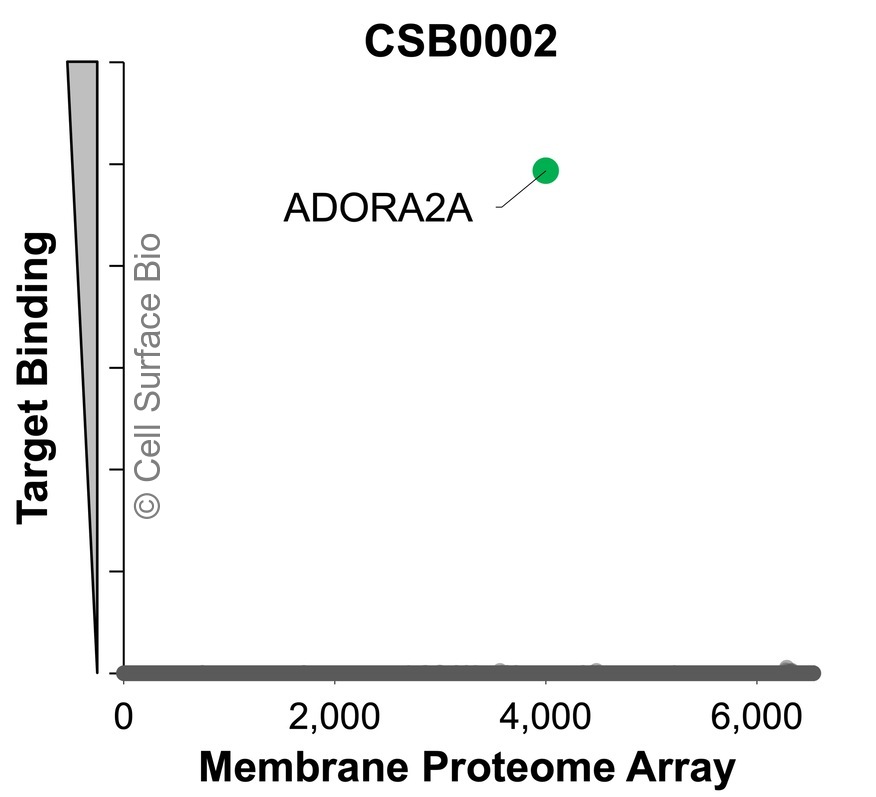 |
The specificity of ADORA2A Monoclonal Antibody (CSB0002) was tested on the Membrane Proteome Array™ and shown to be specific for ADORA2A. The Membrane Proteome Array™ contains 6,000 different human membrane proteins, each expressed in unfixed human cells to ensure native conformation and post-translational modifications. The Membrane Proteome Array™ represents the industry standard for determining the binding specificity of antibodies and other protein ligands. | |
CSB VeRSaMAbs:
We produce and validate all our monoclonal antibodies in-house so that you can confidently choose the right antibody for your assay. All antibodies are VALIDATED for common applications, RECOMBINANT for batch-to-batch consistency, and SPECIFIC in binding to only your target.
| Target | ADORA2A |
| Target Aliases | ADORA2, RDC8, A2aR |
| Isotype | IgG2a |
| Species Reactivity | Human (Others untested) |
| Concentration | 1 mg/ml |
Stable for 12 months from date of receipt when stored at 4°C. Avoid repeated freeze-thaw cycles.
ADORA2A is a member of the G-protein coupled receptor family, which is a group of seven-pass transmembrane proteins. This protein binds adenosine and interacts with G proteins to activate adenylyl cyclase and increase intracellular CAMP levels. ADORA2A is involved in cardiac rhythm, circulation, immune function, pain regulation, sleep, and may play a role in inflammatory diseases and neurodegenerative disorders.